How to get qualified B2B leads from LinkedIn (the founder brand way)
How to get qualified B2B leads from LinkedIn: build a founder brand that earns trust, post content buyers act on, and turn attention into a real pipeline.
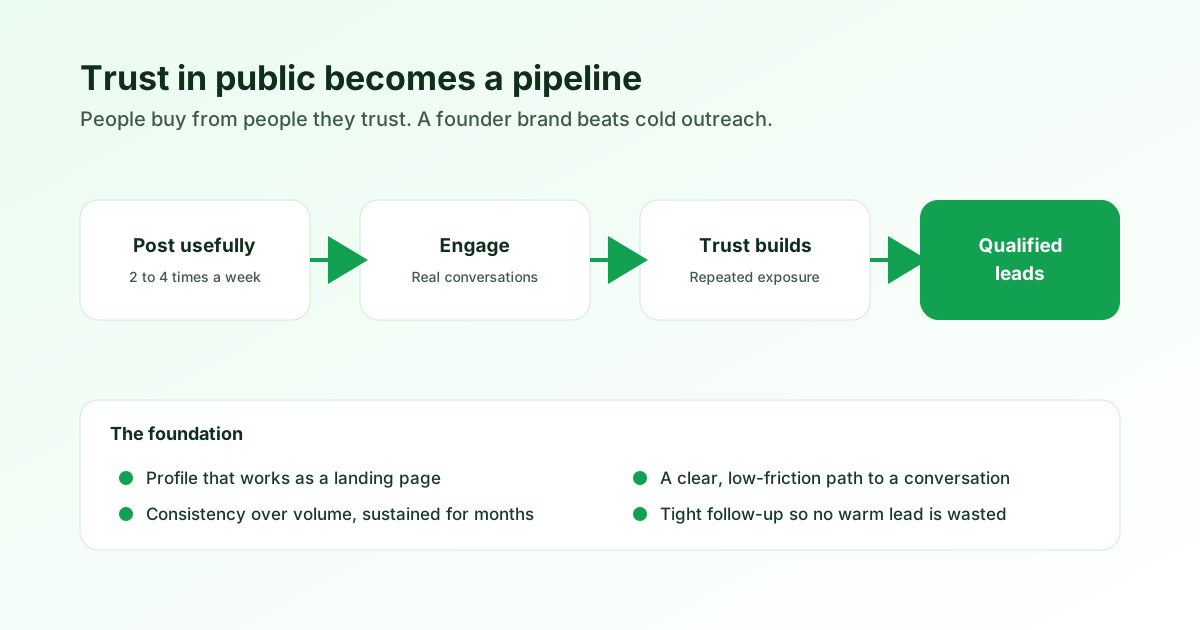
To get qualified B2B leads from LinkedIn, stop selling and start building a founder brand: turn your profile into a landing page, post useful content consistently that speaks to your buyers’ real problems, engage genuinely with the right people, and make it easy for warm connections to start a conversation. Cold pitching gets ignored; trust built in public gets replies. In B2B, people buy from people they already trust, and LinkedIn is where that trust is built at scale, which is why a founder posting personally beats almost any ad or automated outreach.
This guide covers how to build that founder brand, what to post, how to turn attention into a real pipeline, and the mistakes that make LinkedIn feel like shouting into the void.
Key takeaways
- Build a founder brand, not a sales machine. People buy from people they trust, not from logos.
- Optimise your profile as a landing page: clear on who you help and how to start a conversation.
- Post useful content consistently. Two to four thoughtful posts a week beats occasional bursts.
- Engage genuinely with the right people; conversations, not broadcasts, create leads.
- Fix follow-up first so you convert the inbound the brand earns while it compounds.
Why LinkedIn works for B2B, and why founder brand beats ads
LinkedIn is where your B2B buyers already are, thinking about work, and that context is what makes it powerful. But the mistake most businesses make is treating it like an ad channel or a cold-outreach machine, blasting pitches that everyone ignores. What actually works is the opposite: showing up as a credible person who consistently shares genuinely useful thinking, so that when a buyer has the problem you solve, you are the person they already trust.
This is why a founder brand outperforms a company page and often outperforms paid. People engage with people, not logos, and trust earned in public is worth more than any impression you can buy. Research on B2B buying, including the well-known Edelman and LinkedIn B2B Thought Leadership study, consistently finds that strong thought leadership directly influences who buyers shortlist and are willing to pay more for. That is the whole mechanism behind our founder brand on LinkedIn work, and it is one of the durable owned channels we cover in getting more B2B leads without more ad spend.
Step 1: turn your profile into a landing page
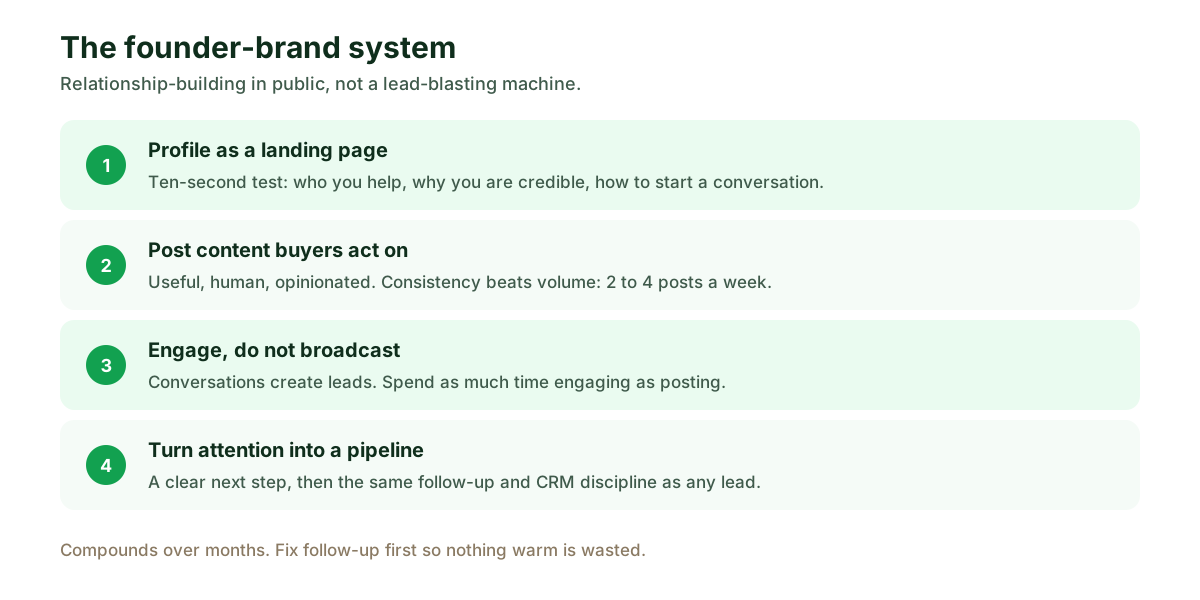
Before you post anything, fix your profile, because every piece of content sends curious people there and most profiles waste the visit. Treat it as a landing page, not a resume. Your headline should say who you help and how, not just your job title. Your about section should speak to your buyer’s problem and what you do about it, in plain language. Your banner, featured links and experience should all reinforce the same clear message and make the next step obvious.
The test is simple: could a stranger land on your profile and, within ten seconds, understand who you help, why you are credible, and how to start a conversation? If not, fix that first. A strong profile quietly converts the attention your content earns; a weak one lets it leak away. This is the same conversion thinking that applies to any landing page, just applied to your personal presence.
Step 2: post content buyers actually act on
Content is the engine, but only the right content works. The winning approach is to consistently post genuinely useful thinking aimed squarely at your buyers’ problems: practical insight from your work, clear points of view on your industry, lessons learned, and answers to the questions your buyers actually ask. The goal is to be useful and human, not to broadcast. Posts that teach, take a real position, or tell an honest story earn attention and trust; thinly veiled ads and generic motivation do not.
On cadence, consistency beats volume. Two to four thoughtful posts a week, sustained over months, outperforms a heroic burst that fizzles, because both the platform and human trust reward reliability. You do not need to be everywhere or go viral; you need to show up dependably with substance. If producing that consistently feels daunting, that is exactly what a content engine is for, turning one founder’s thinking into a steady, sustainable stream without it eating all their time.
Step 3: engage, do not just broadcast
LinkedIn leads come from conversations, not from shouting into the feed. Posting is only half the work; the other half is genuine engagement. Comment thoughtfully on the posts of the people you want to reach, reply properly to everyone who engages with yours, and build real relationships rather than collecting connections. This is where broadcasting turns into a pipeline, because a comment or a reply is the start of a conversation, and conversations are where trust and leads actually form.
The businesses that get leads from LinkedIn treat it as a two-way channel. They spend as much time engaging as posting, and they focus that engagement on the specific people and companies they want as customers. It is slower and more human than automation, and that is precisely why it works: real attention from a credible founder is scarce and valued, while automated engagement is spotted and ignored instantly.
Step 4: turn attention into a pipeline
Attention is not a lead until it becomes a conversation you can act on, so you need a clear, low-friction path from content to conversation. Make it easy for warm connections to reach you: a clear next step in your profile, an occasional soft call to action in your content, and a genuine, non-pushy response when someone shows interest. When a conversation starts, treat it like the qualified lead it is, and make sure it does not fall through the cracks.
This is where LinkedIn connects to the rest of your system. The inbound conversations your founder brand creates should flow into the same follow-up and CRM discipline as every other lead, so nothing is forgotten and every warm connection gets a timely, human response. If your follow-up is shaky, you will earn attention and then waste it, which is why we always say fix follow-up first, as covered in how to automate lead follow-up and delivered through marketing automation.
A simple content mix to start with
If the blank page is the barrier, a simple rotating mix removes the guesswork. Rotate through four kinds of post. First, practical insight: something useful you learned from doing the work, that a buyer could act on today. Second, a point of view: an honest, specific opinion on your industry that shows how you think. Third, a story: a real client situation or a lesson from your own journey, told plainly, because stories build trust faster than facts. Fourth, an answer: directly addressing a question your buyers actually ask, the same buyer questions that make good blog content. Keep an occasional soft invitation to talk in the mix, but keep it rare, because trust is what converts, not constant pitching. Rotating these four means you never stare at a blank page and your feed stays varied enough to hold attention. As Harvard Business Review’s work on building a personal brand notes, an authentic, consistent point of view is what makes a professional brand credible rather than performative.
What about LinkedIn ads and automation tools?
Two questions come up constantly. On ads: LinkedIn ads have a place for specific campaigns and audiences, but they do not replace a founder brand, they complement it. The trust and inbound a founder builds organically is something ads cannot buy, so build the owned presence first and use ads as a lever, not a substitute. On automation tools: be very careful. Tools that mass-send connection requests and templated messages are exactly what erodes trust and get accounts restricted, and buyers spot them instantly. The parts of LinkedIn that create leads, genuine content and real engagement, are precisely the parts that should not be automated. What you can and should systematise is the unglamorous back end: capturing the conversations you start, following up reliably, and keeping your CRM clean, which is a very different thing from faking human connection at scale. Automate the plumbing, never the relationship.
The mistakes that make LinkedIn feel useless
Most people who say LinkedIn does not work are making one of a few avoidable mistakes. The first is pitching instead of helping, treating the feed as an ad slot, which buyers tune out instantly. The second is inconsistency, posting for two weeks then vanishing, so trust never compounds. The third is broadcasting without engaging, expecting leads from posts while ignoring the conversations that actually create them. The fourth is automating the human parts, mass connection requests and templated messages that scream spam and damage the very trust the channel runs on. The fifth is impatience, quitting at week four right before it starts to work.
Avoid these and LinkedIn becomes exactly what it should be: a channel where a credible founder builds trust at scale and turns it into qualified inbound. None of the fixes are complicated, but all of them require treating LinkedIn as relationship-building in public rather than a lead-blasting machine.
What good looks like after a few months
Set honest expectations, because this compounds rather than switching on. In the first weeks, you build reach and reputation, and the numbers can feel quiet. By a couple of months in, if you have posted consistently and engaged genuinely, inbound conversations start appearing, people who already trust you because they have been reading your thinking. Over further months this grows into a steady flow of qualified leads that arrive warm, pre-sold on your credibility in a way no cold lead ever is. The founders with enviable LinkedIn pipelines are almost never the most naturally charismatic; they are the ones who simply showed up usefully and consistently for long enough to compound. That patience, plus tight follow-up so nothing warm is wasted, is the whole game.
Where to start
If you want more qualified B2B leads without pouring more into ads, your own founder brand is one of the highest-leverage assets you have, and it is almost certainly underused. Our free audit reviews your current LinkedIn presence and shows the fastest way to turn it into a real pipeline, from profile to content to follow-up, before you commit to anything. From there, our founder brand on LinkedIn work builds and runs the whole system, part of the broader Grow engine that creates durable, owned demand.
Frequently asked questions
Build a founder brand rather than blasting sales messages. Optimise your profile as a landing page, post useful content consistently that speaks to your buyers' problems, engage genuinely with the right people, and make it easy for warm connections to start a conversation. Trust built in public turns into inbound leads that are far more qualified than cold outreach.
For most B2B businesses, yes. People trust and engage with people far more than with logos, so a founder posting personally reaches and converts better than a company page. The company page still matters for credibility, but the founder's personal presence is what drives conversations and leads.
Consistency matters more than volume. Two to four thoughtful posts a week, sustained over months, beats a burst that fizzles. LinkedIn rewards regular, genuine activity, and buyers form trust through repeated exposure, so a steady cadence you can maintain is far better than an unsustainable sprint.
It compounds over months rather than switching on. Early weeks build reach and reputation; inbound conversations and qualified leads typically grow from a couple of months in and accelerate as your audience and authority build. Fixing follow-up first means you convert the conversations you do get while the brand compounds.
Want this done for you?
Yovance is an AI growth and automation studio. We can put this into practice for your business.